Kitchen Gear
Seasoning and Caring for Cast Iron: A No-Myths Guide
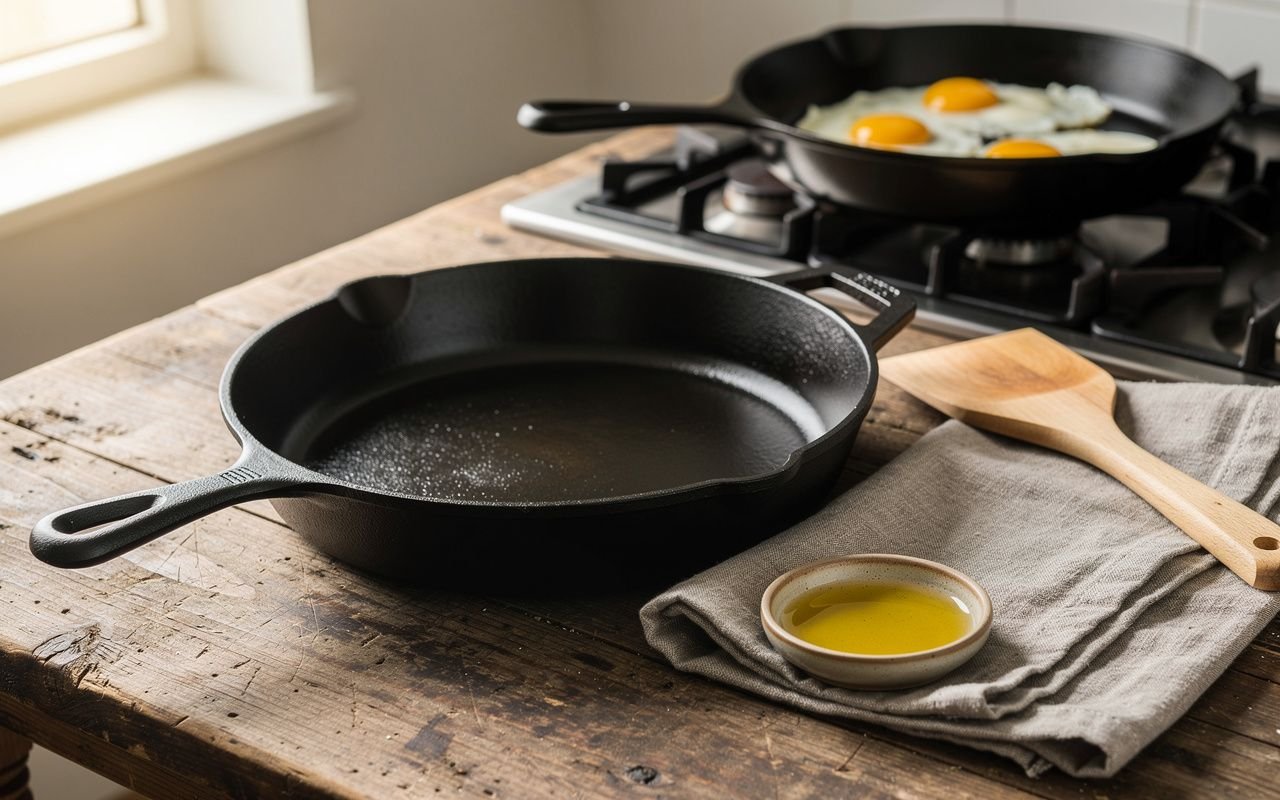
Cast iron is not fussy, it just rewards consistency. How to season a pan, clean it day to day, and rescue one that is rusty or sticky.
Cast iron has a reputation for being fussy, and that reputation scares people away from one of the most useful and affordable pans in the kitchen. In reality, caring for cast iron comes down to a few simple habits. Whether you just bought a new skillet or inherited a rusty one from a relative, here is everything you need to know.
What seasoning actually is
Seasoning is not a coating you buy. It is a thin layer of oil that has been heated until it bonds to the iron and turns into a hard, slick film. The process is called polymerization. Each time you cook with fat or re-season the pan, you add another very thin layer. Over time, those layers build into the smooth, black, naturally nonstick surface that makes cast iron so loved.
Most new cast iron comes pre-seasoned from the factory. That base layer is ready to use right away, but it will get much better after a few months of regular cooking.
How to season a pan in the oven
Do a full oven seasoning for a new unseasoned pan, after removing rust, or any time the surface looks dull, patchy, or gray.
- Clean it. Wash the pan with warm water, a little dish soap, and a stiff brush. Rinse well.
- Dry it completely. Towel dry, then set the pan on a burner over low heat for a few minutes until every trace of moisture evaporates.
- Apply a very thin layer of fat. Use about 1 teaspoon of a neutral oil such as vegetable or canola oil, or a little vegetable shortening. Rub it over every surface: inside, outside, and the handle.
- Wipe it off. This is the step people skip. With a clean lint-free cloth, wipe the pan as if you were trying to remove all the oil. What remains is exactly the right amount. Too much oil leaves a sticky, blotchy finish.
- Bake it upside down. Place the pan upside down on the middle rack of a 450 to 500 degree F oven, with a sheet of foil on the rack below to catch any drips. Bake for 1 hour.
- Cool in the oven. Turn off the heat and let the pan cool inside.
- Repeat. Three or four rounds build a strong base layer. Expect some smoke, so turn on your vent fan.
Everyday cleaning
This is where most of the myths live. Here is the practical routine we use every day:
- Clean it while it is warm. Food releases more easily from a warm pan.
- Yes, you can use a little soap. Modern dish soap will not strip well-bonded seasoning. Just avoid harsh scouring powders and long soaks.
- Scrub stuck bits with coarse salt. Pour in a couple of tablespoons of kosher salt with a splash of oil and scrub with a folded paper towel. The salt works as a gentle abrasive.
- For tough residue, simmer a little water in the pan for a few minutes, then scrape with a flat wooden spatula or pan scraper.
- Dry immediately and completely. Towel dry, then warm the pan on the stove for a minute or two.
- Oil lightly. While the pan is still warm, rub in a few drops of oil and wipe until the surface looks satiny rather than greasy.
What not to do
- Do not put cast iron in the dishwasher. It will rust.
- Do not soak it in the sink or leave it wet overnight.
- Do not store leftovers in the pan. Moisture and acid will damage the seasoning.
- Do not plunge a very hot pan into cold water, which can cause cracking or warping.
- Avoid long simmers of very acidic foods, like tomato sauce or wine braises, until your seasoning is well established.
The best way to season: cook in it
The fastest way to improve a skillet is to use it often, especially for cooking with fat. In the first few weeks, favor dishes like seared meats, roasted potatoes, shallow-fried chicken, cornbread, and sauteed vegetables. Hold off on delicate eggs and fish until the surface is slick. Before long, eggs will slide around almost as easily as they would in a nonstick pan.
Rescuing a rusty or sticky pan
Light rust
Surface rust is common and easy to fix. Scrub the rusted areas with steel wool or a stiff brush and a little water until you reach bare, gray metal. Wash, dry thoroughly on the stove, and do a full oven seasoning right away, since bare iron rusts quickly.
Sticky or gummy surface
A tacky surface means too much oil was applied and it did not fully polymerize. Bake the pan upside down at 450 to 500 degrees F for another hour to finish the process. If it is still sticky, scrub it lightly and re-season with thinner coats.
Flaking black bits
Small black flakes are usually carbonized food or loose seasoning, not a sign the pan is ruined. Scrub the loose areas away, then re-season. They are harmless, just unappealing.
Storage tips
Store cast iron in a dry place. If you stack pans, place a paper towel between them to protect the surface and absorb moisture. In humid climates, it helps to store Dutch ovens with the lid off or propped open slightly so air can circulate, and to warm pans briefly on the stove after a stretch of damp weather to drive off any moisture.
Built to last generations
A cast iron skillet is one of the few kitchen tools that actually gets better with age. It is not delicate; it simply rewards consistency. Clean it, dry it, give it a whisper of oil, and cook in it often. Treat it well and it could be the pan someone in your family is still searing steaks in fifty years from now.
Want every recipe mentioned in the journal? Try the club free for 15 days.