Kitchen Gear
How to Choose a Skillet: Cast Iron, Carbon Steel, Stainless, or Nonstick
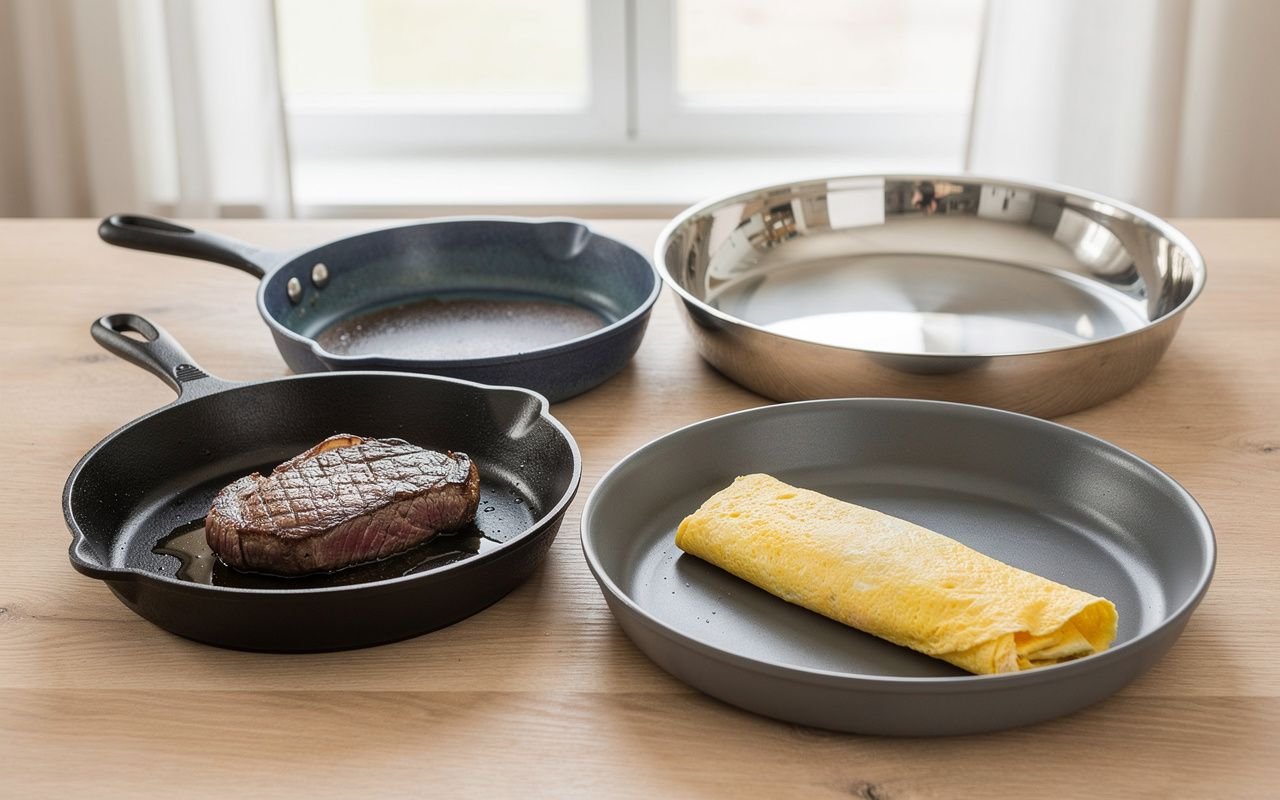
Four skillet materials, four very different personalities. Here is how to match a pan to the way you really cook, plus the size and handle details that matter.
If you could only own one pan, it would be a skillet. It sears, sautes, fries, bakes cornbread, and reduces a pan sauce in minutes. But walk into any kitchen shop and you face four very different materials, each with passionate fans. After years of testing pans in our kitchen and choosing which ones earn a place in our shop, here is how we think about the decision.
What a skillet actually needs to do
A great skillet does three things well. It heats evenly, so food does not scorch in one spot and stay pale in another. It holds heat, so a cold steak does not crash the temperature. And it releases food without a fight. No single material wins on all three, which is why many home cooks end up happiest with two pans rather than one.
Cast iron
Best for: searing steaks and chops, cornbread, skillet pizza, blackened fish, and anything that goes from stovetop to oven.
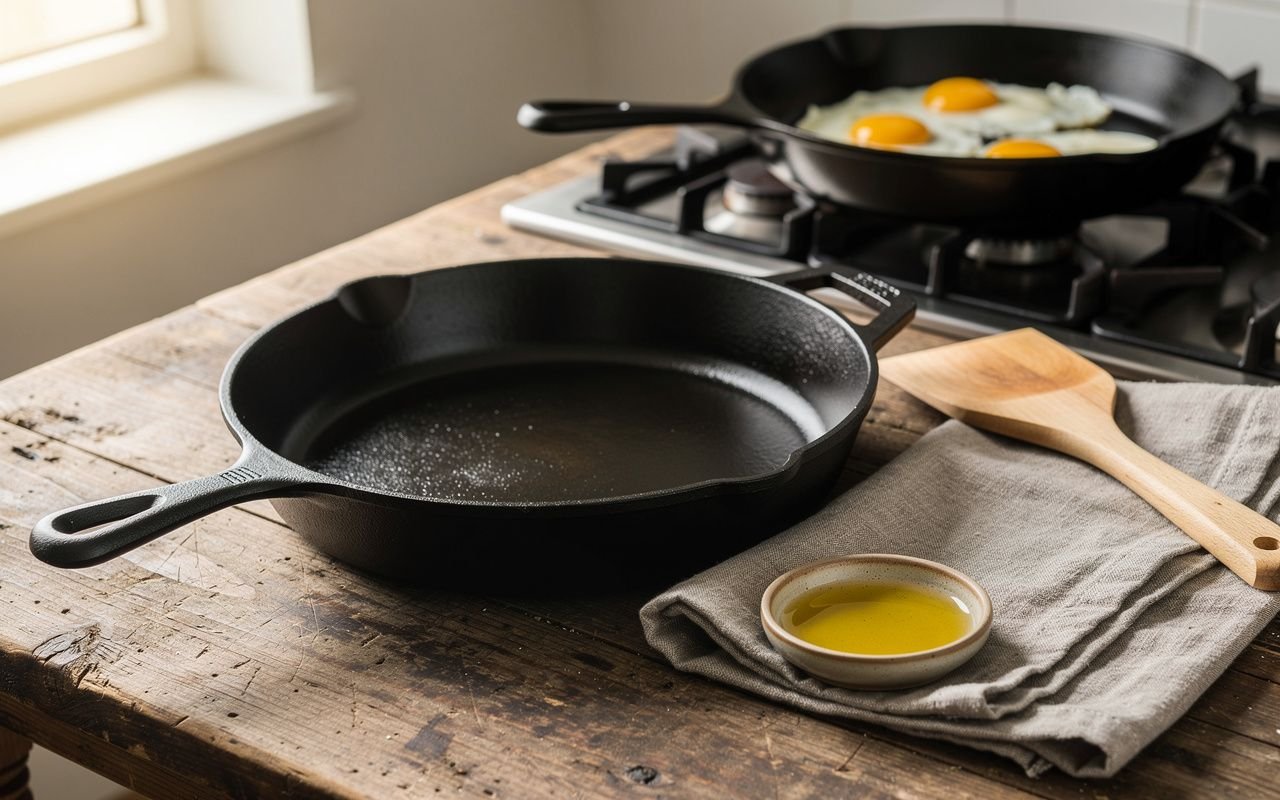
Cast iron is heavy and slow to heat, but once it is hot it stays hot. That heat retention is what gives you a deep, even crust on meat. It is nearly indestructible, inexpensive, and improves with use as layers of seasoning build up. The downsides are weight, a long preheat, and some sensitivity to acidic ingredients: a long-simmered tomato sauce can wear down seasoning and pick up a metallic taste. It also needs to be dried promptly to prevent rust.
Carbon steel
Best for: high-heat searing, stir-fries, eggs once well seasoned, and cooks who want cast iron performance with less weight.
Carbon steel is the workhorse of many restaurant kitchens. It seasons just like cast iron and develops a slick surface, but it is thinner and lighter, so it heats faster and responds quickly when you turn the burner down. Because it is thinner, it can develop hot spots on a small burner, and a new pan needs a few weeks of regular cooking to reach its best nonstick character. Its care routine is the same as cast iron.
Stainless steel
Best for: pan sauces, browning chicken, sauteing vegetables, and anything acidic.
A good stainless skillet has an aluminum or copper core sandwiched between layers of steel, often called clad or tri-ply construction. The core spreads heat evenly while the steel surface is durable and nonreactive, so you can deglaze with wine, lemon juice, or tomatoes without worry. Stainless also builds fond, the browned bits that stick to the pan and become the base of a great sauce. It is dishwasher safe, oven safe to high temperatures, and can last for decades.
The learning curve is sticking. Food releases from stainless when the pan is properly preheated, the fat is shimmering, and the food has formed a crust. Flip too early and it tears. Once you learn to wait, stainless becomes one of the most versatile pans you can own.
Nonstick
Best for: eggs, omelets, pancakes, delicate fish, and cooking with very little oil.
Nonstick is the easiest pan to use and clean, and it is the right tool for soft scrambled eggs and crepes. The trade-offs are real, though. Most nonstick coatings are meant for low to medium heat, which makes them a poor choice for hard searing. Metal utensils and abrasive scrubbers damage the surface, and even with careful use the coating wears out, usually within a few years. Think of nonstick as a specialist pan with a limited lifespan, and do not pay premium prices for it.
Size, shape, and handles
Material is only half the decision. Keep these points in mind:
- Size: A 10-inch skillet is ideal for one or two people. For a family, or for searing four chicken thighs without crowding, a 12-inch pan is the better everyday choice. Crowding causes steaming instead of browning.
- Cooking surface: Pans are sold by rim diameter, but flared sides mean the flat bottom can be two inches smaller. Measure the base.
- Sides: Sloped sides make tossing and flipping easy. Straight sides, found on saute pans, hold more liquid for braising.
- Handles: Look for a handle that stays comfortable to grip and is securely riveted or cast in place. A helper handle on the opposite side makes a heavy 12-inch pan much easier to lift.
- Oven safety: Check the maximum temperature. Plastic or silicone handles often limit you to 350 or 400 degrees F.
- Induction: Cast iron, carbon steel, and most clad stainless work on induction. Aluminum nonstick only works if it has a magnetic base.
Our recommended pairings
Rather than hunting for one perfect pan, we suggest building a small team based on how you cook:
- The balanced kitchen: a 12-inch stainless skillet for everyday cooking and sauces, plus a 10-inch nonstick for eggs.
- The searing fan: a 12-inch cast iron skillet for crusts and oven work, plus a 10-inch nonstick.
- The small-space cook: a single 10-inch carbon steel pan that handles almost everything once seasoned.
How to test a pan before you buy
If you can handle a pan in person, pick it up the way you would while cooking. Hold it out by the handle with one hand and imagine it full of food. Check that the handle angle feels natural and that the pan sits flat on the counter without rocking. A warped base will spin on a glass cooktop and never make full contact with an induction surface.
A pan is a long-term investment
A well-made stainless, cast iron, or carbon steel skillet can outlive its owner, so spend a little more there and a little less on nonstick, which you will eventually replace. Whatever you choose, the best skillet is the one you reach for every day and learn inside and out. Pay attention to how it heats on your stove, and within a month it will feel like an extension of your hand.
Want every recipe mentioned in the journal? Try the club free for 15 days.