Technique
Baking in Humid Weather: Simple Adjustments That Work
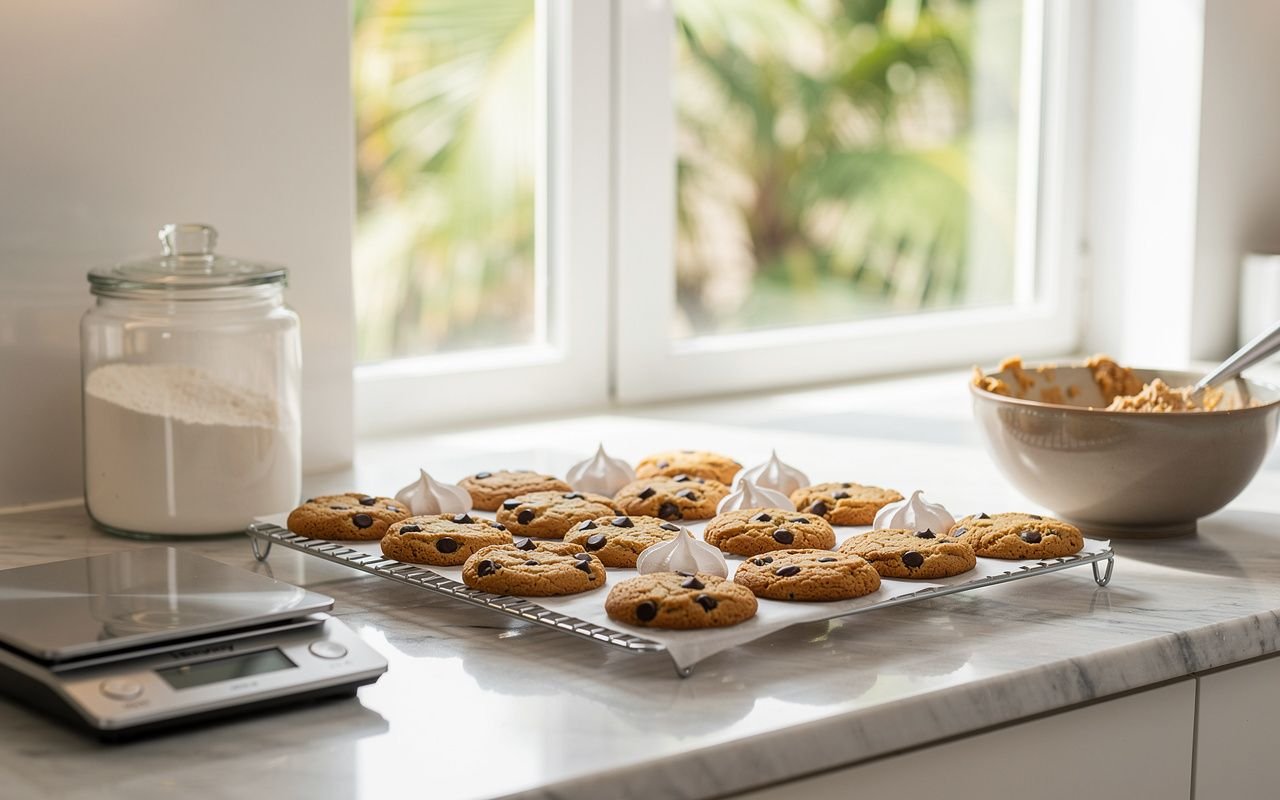
Flat cookies, sticky meringues, and runaway bread dough are often humidity at work. Here is how to adjust storage, measuring, and technique for moist air.
If you have ever followed a cookie recipe to the letter and watched the dough spread into thin puddles, or pulled crisp meringues from the oven only to find them sticky an hour later, humidity may be the culprit. Many of our readers bake in warm, humid, coastal kitchens, and our test kitchen spends a lot of time adjusting recipes for moist air. Most recipes are written for moderate conditions, but a few simple changes will help you bake with confidence even when the air feels thick.
How humidity affects baking
Many baking ingredients are hygroscopic, which means they absorb moisture from the air. Flour, sugar, cornmeal, and cocoa all pull in water on humid days. That extra moisture changes how doughs and batters behave:
- Flour that has absorbed moisture effectively adds liquid to a recipe, making dough stickier and batters looser.
- Sugar-heavy treats like meringues, caramel, and brittle absorb moisture after baking and turn soft or tacky.
- Yeast doughs rise faster in warm, humid kitchens, sometimes before the flavor has time to develop.
- Crisp baked goods such as crackers, cookies, and pie crust lose their snap quickly.
- Chocolate can develop a dull, streaky surface called bloom when moisture condenses on it.
Start with storage
The easiest adjustment happens before you bake. Store flour, sugar, cornmeal, and cocoa in airtight containers. In very humid climates, consider keeping flour in the refrigerator or freezer, which also keeps whole-grain flours from going rancid. Let chilled flour come to room temperature in its sealed container before using it so condensation does not form. Replace baking powder and baking soda every six months or so, since moisture weakens them. To test baking powder, stir 1/2 teaspoon into a little hot water; it should bubble vigorously.
Weigh your ingredients
Measuring by volume is imprecise on any day, and on humid days flour can pack into a cup differently. A digital kitchen scale gives consistent results and makes adjustments predictable. If a recipe lists only volume, spoon the flour into the cup and level it rather than scooping, which can add as much as 25 percent more flour.
Adjustments for cookies, cakes, and quick breads
- Hold back some liquid. Start with about 1 to 2 tablespoons less liquid per cup called for, and add it back only if the dough or batter looks dry.
- Add flour gradually. For sticky doughs, add flour 1 tablespoon at a time until the dough reaches the texture the recipe describes.
- Chill cookie dough. Refrigerating dough for at least 30 minutes, or overnight, firms the butter and helps prevent spreading.
- Bake by doneness cues. Moist batters may need a few extra minutes to set. Rely on a clean toothpick, springy crumb, or golden edges instead of the timer alone.
- Keep your kitchen cool. Run the air conditioning or a dehumidifier while you bake. Butter that softens too much in a warm kitchen leads to greasy cakes and flat cookies.
Yeast breads
Humid heat speeds up fermentation, so watch the dough rather than the clock. It is ready when it has roughly doubled and a floured finger pressed into it leaves an indentation that springs back slowly. A few helpful changes:
- Use cool water instead of warm to slow the rise.
- Reduce the yeast by about a quarter if doughs consistently over-proof.
- Try an overnight rise in the refrigerator, which slows fermentation and develops deeper flavor.
- Add extra flour sparingly while kneading; a slightly tacky dough bakes into a softer, lighter loaf.
Pie crusts and pastry
Flaky pastry depends on cold fat staying in distinct pieces. In a warm, humid kitchen, chill everything: the flour, the butter cubes, the bowl, and even the pastry blender. Add ice water a tablespoon at a time, since the flour may already hold extra moisture. If the dough softens while rolling, slide it onto a sheet pan and refrigerate it for 15 minutes before continuing. Blind bake bottom crusts for custard and cream pies to keep them crisp.
Meringues, candy, and frosting
Sugar-based confections are the most sensitive to humidity. For the best results:
- Choose dry days for meringues, macarons, and hard candy whenever possible.
- Dissolve the sugar completely when whipping meringue, and add a little cream of tartar or cornstarch for stability.
- Dry meringues in the oven. Once baked, turn the oven off and leave them inside with the door closed for an hour or more.
- Cook candy a degree or two higher than the recipe suggests, using a calibrated candy thermometer, to drive off extra moisture.
- Add a bit more powdered sugar or chill buttercream briefly if it becomes too soft to pipe.
Keeping baked goods fresh
Cool baked goods completely before storing them, since trapped steam turns crisp things soft. Store crisp and soft items separately; one soft cookie in a tin will soften everything around it. Keep crackers and crisp cookies in airtight containers, and refresh them in a 300 degree F oven for about 5 minutes if they lose their crunch. Cakes with cream cheese or whipped cream frostings should be refrigerated, especially in hot weather. Bread keeps best at room temperature for a day or two; after that, slice and freeze it.
Keep a baking journal
Every kitchen is different. Jot down the weather, what you adjusted, and how the results turned out. After a few bakes, you will have a personal guide that works for your climate, and humid days will stop feeling like a gamble.
Want every recipe mentioned in the journal? Try the club free for 15 days.