Technique
How to Grill Fish Without Sticking
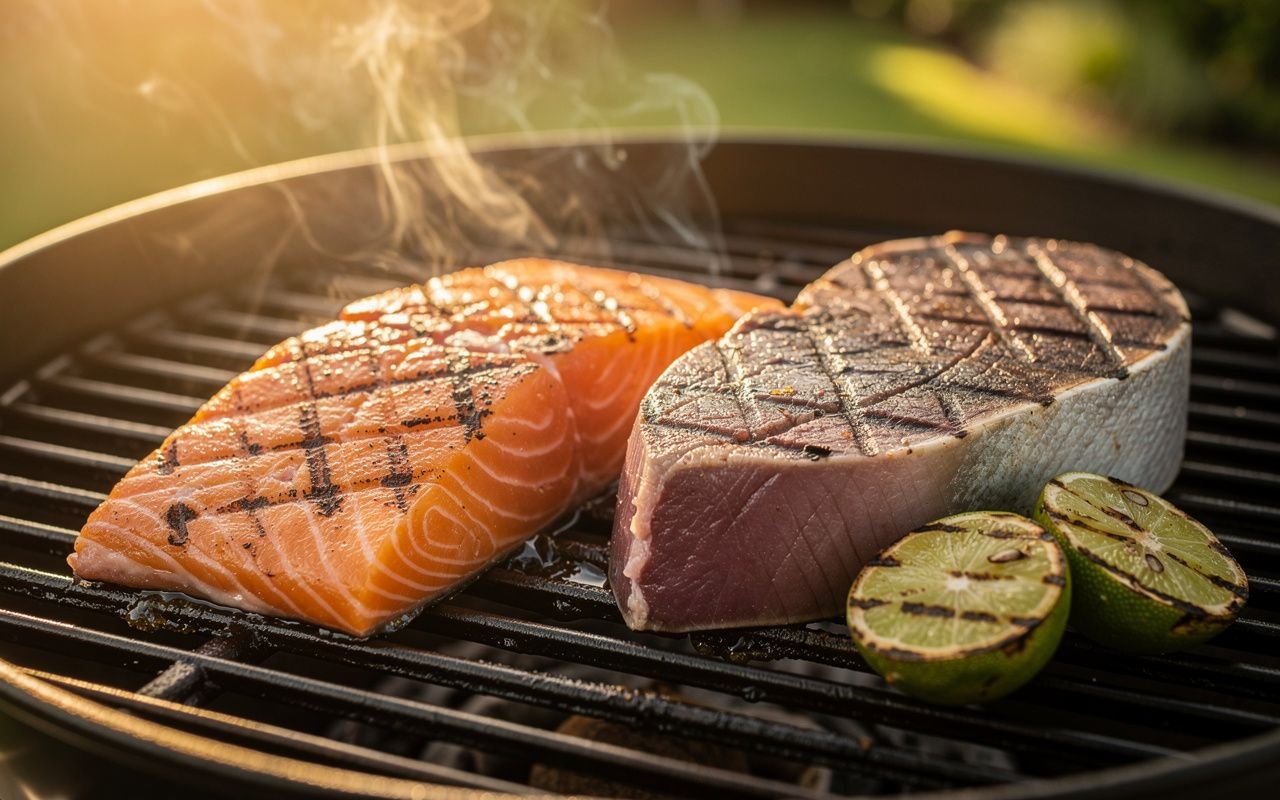
Sticking is not bad luck. Clean grates, high heat, dry fish, and patience are all it takes to lift a perfectly seared fillet off the grill in one piece.
Nothing deflates a summer cookout faster than a beautiful fillet that welds itself to the grill grates and flakes apart into the coals. The good news is that sticking is not bad luck. It happens for a few predictable reasons, and once you understand them, grilling fish becomes one of the fastest and most satisfying things you can cook outdoors.
Why fish sticks
Proteins in fish bond to metal when they hit a surface that is not hot enough or not clean. As the proteins cook, they firm up and release naturally, but only if the surface was hot and they have had time to form a crust. Most sticking comes down to three things: dirty grates, grates that are not hot enough, and flipping too soon.
Choose fish that loves the grill
Some fish are built for direct grilling; others do better with a little help.
- Great for direct grilling: swordfish, tuna, salmon, mahi-mahi, halibut steaks, and other firm fish at least 1 inch thick. Whole fish like snapper and branzino are also excellent, because the skin holds everything together.
- Use a basket, plank, or foil: flounder, sole, tilapia, and other thin, delicate fillets that break apart easily.
When you can, buy fillets with the skin on. Skin acts as a natural barrier, crisps beautifully, and gives you something sturdy to flip.
The five-step method
1. Clean the grates thoroughly
Preheat the grill with the lid closed for 10 to 15 minutes, then scrub the grates with a grill brush or scraper. Old residue acts like glue for fish, and a hot grate is much easier to clean than a cold one.
2. Get it hot
Aim for medium-high heat, about 450 to 500 degrees F. Over charcoal, you should be able to hold your hand about 5 inches above the grate for only 2 to 3 seconds. High heat sears the surface quickly and forms the crust that lets the fish release.
3. Oil the grates and the fish
Fold a paper towel into a tight pad, dip it in a high-smoke-point oil such as canola or avocado oil, and hold it with long tongs. Wipe it over the grates several times until they look glossy. Then pat the fish very dry with paper towels, brush it lightly with oil, and season it. Dry fish sears; wet fish steams and sticks.
4. Place it and leave it alone
Lay the fish down at a slight angle to the grates, skin side down if it has skin, and press gently for a second so it makes full contact. Close the lid and do not touch it. For a 1-inch fillet, that usually means 3 to 5 minutes on the first side. When the fish is ready, it will release with gentle pressure from a thin spatula. If it resists, give it another minute.
5. Flip once with the right tool
A wide, thin, flexible metal spatula, often sold as a fish spatula, slides under the fillet without tearing it. Slide it in along the direction of the grates, then turn the fish in one confident motion. Many skin-on fillets can finish skin side down with the lid closed and never need flipping at all.
How to tell when it is done
Fish cooks quickly and can go from moist to dry in a minute or two. Food safety guidelines recommend cooking fish to an internal temperature of 145 degrees F, when the flesh is opaque and separates easily with a fork. An instant-read thermometer in the thickest part removes the guesswork. Tuna and salmon are often served less done by preference, so buy high-quality fish from a trusted source if you plan to cook them rare or medium. A handy rule of thumb for timing is about 8 to 10 minutes of total cooking per inch of thickness.
Smart workarounds for delicate fish
- Grill basket: A hinged, oiled basket holds fillets securely and lets you flip everything at once.
- Citrus bed: Lay thick slices of lemon, lime, or orange on the grates and set the fish on top. The fruit prevents sticking, perfumes the fish, and the charred slices make a great garnish.
- Wood plank: Soak an untreated cedar or alder plank in water for at least an hour, then grill the fish on it with the lid closed. It adds gentle smoky flavor and requires no flipping.
- Foil packet: Wrap thin fillets with butter, herbs, and sliced vegetables. It is technically steaming, but it is foolproof and full of flavor.
Marinades and sugar
Marinades with honey, sugar, or sweet sauces are prone to burning and sticking. Use them sparingly, wipe off the excess before grilling, or brush glazes on only during the last minute or two. Keep acidic citrus marinades short, about 15 to 30 minutes, or the texture can turn mushy.
Quick troubleshooting
- Fish tore when flipping: it was flipped too soon, or the grates were not clean or hot enough.
- Charred outside, raw inside: the heat was too high for the thickness. Move it to indirect heat and close the lid to finish.
- Pale with no grill marks: the grill was not fully preheated, or the fish was too wet.
- Dry and chalky: it overcooked. Pull it a few degrees early and let carryover heat finish the job.
Simple ways to serve it
Grilled fish needs very little. Try a squeeze of lime and a spoonful of mango salsa, a drizzle of fresh herb sauce, or a pat of garlic butter melting over the top. Serve it with grilled corn and a crunchy slaw, and you have a coastal dinner on the table in under 30 minutes. Once you master the method, you will find yourself firing up the grill for fish all year long.
Want every recipe mentioned in the journal? Try the club free for 15 days.