Meal Planning
The Two-Hour Sunday Meal Prep Plan That Actually Lasts All Week
Skip the identical containers of dry chicken. Prep flexible components on Sunday and mix them into five different weeknight dinners in about 15 minutes each.
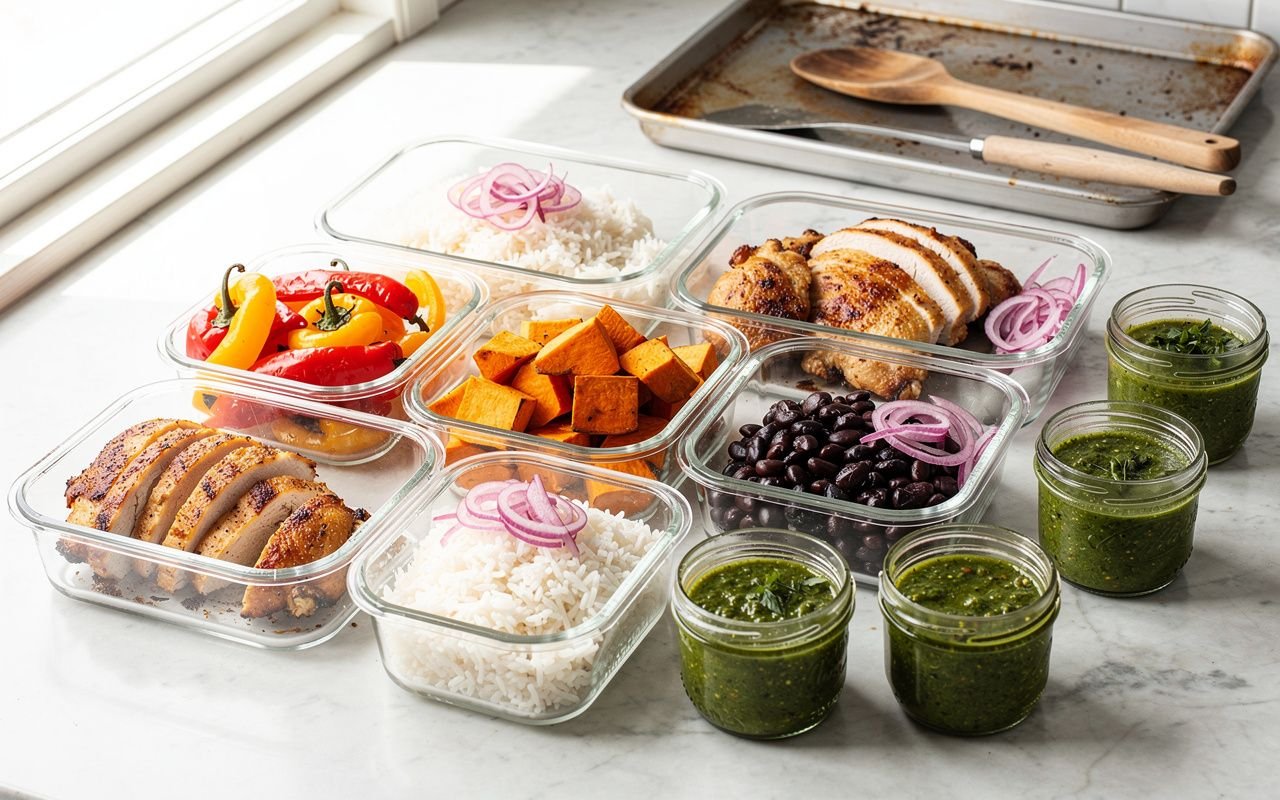
Meal prep has a reputation problem. Picture it and you probably see twenty identical containers of dry chicken and broccoli that nobody wants to eat by Wednesday. The approach we use in our own homes is different: instead of cooking finished meals, we prep components that mix and match into different dinners all week. Two focused hours on Sunday can save you an hour every weeknight, without the boredom.
Why components beat complete meals
Fully assembled meals get soggy, lose texture, and lock you into decisions you made days earlier. Components stay fresher and more flexible. A batch of roasted vegetables can become a grain bowl on Monday, a frittata filling on Wednesday, and taco toppings on Friday. You get variety without extra cooking, and each night takes about 15 minutes to assemble and finish.
Step 1: Plan on paper first
Before you shop, sketch out five weeknight dinners, then look for overlap. The goal is to find ingredients that pull double or triple duty. A simple template:
- 2 proteins, such as a tray of chicken thighs and a pot of black beans
- 1 or 2 grains or starches, such as rice, farro, or roasted sweet potatoes
- 2 trays of roasted vegetables
- 1 or 2 sauces that change the flavor of everything they touch
- 1 raw, crunchy element, such as shredded cabbage or pickled onions
Write the dinners on a note and stick it to the fridge. When everyone knows what Tuesday looks like, the prepped food actually gets used.
Step 2: Shop smart
Organize your list by store section to save time. Buy sturdy vegetables that hold up well after roasting, like peppers, zucchini, cauliflower, broccoli, carrots, and onions. Save delicate items like avocados, tender herbs, and salad greens for a quick midweek top-up, or buy a few slightly underripe so they are ready later in the week.
Step 3: The two-hour Sunday workflow
The secret to finishing in two hours is running several things at once. Here is the order we follow:
- Preheat the oven to 425 degrees F and start the grain. Put rice or farro on the stove first, since it mostly takes care of itself.
- Prep and roast vegetables. Cut them into even pieces, toss with oil and salt, and spread them on sheet pans in a single layer. Roast dense and quick-cooking vegetables on separate pans so you can pull each when it is done, usually after 20 to 35 minutes.
- Cook the proteins. While vegetables roast, season chicken thighs and bake them until they reach 165 degrees F in the thickest part. Simmer dried beans on a back burner, or simply rinse good canned beans.
- Make sauces. This is where flavor lives. A garlicky herb sauce, a lime and yogurt dressing, and a quick peanut sauce each take about 5 minutes and completely change a bowl.
- Prep raw items. Shred cabbage, slice radishes, and quick-pickle a red onion in vinegar with a pinch of sugar and salt.
- Cool, then pack. Spread hot food out to cool before closing containers so condensation does not make things soggy, and get everything into the refrigerator within 2 hours of cooking.
- Clean as you go. Wash bowls and boards while the last tray roasts, so you finish with a clean kitchen.
Step 4: Store for freshness
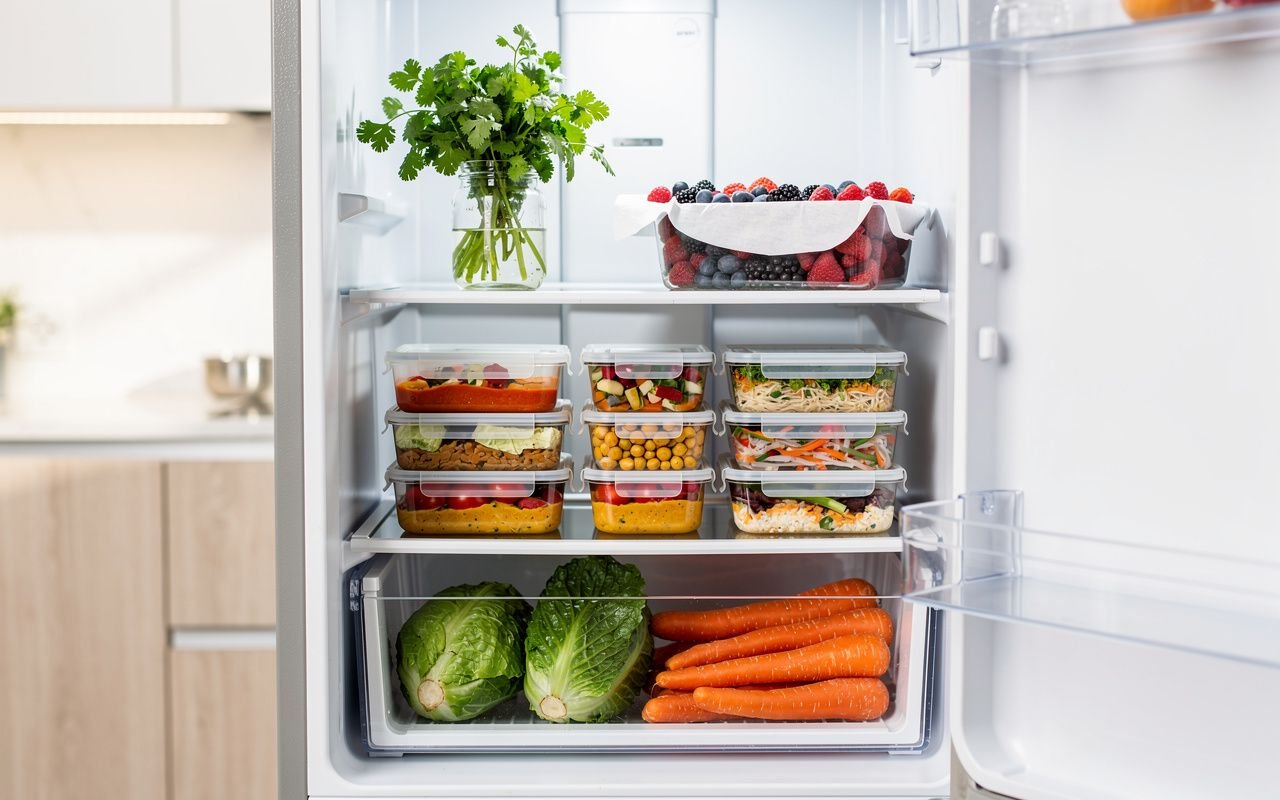
Use clear containers so you can see what you have, and store sauces in small jars. Keep wet and crunchy elements separate until serving. As a general rule, cooked proteins, grains, and vegetables keep well for 3 to 4 days in a refrigerator set to 40 degrees F or below. If your plan runs to five days, freeze a portion of the protein on Sunday and move it to the fridge on Wednesday night to thaw.
A sample week from one prep session
Using chicken thighs, black beans, rice, roasted peppers and onions, roasted sweet potatoes, a cilantro-lime sauce, and quick-pickled onions, the week might look like this:
- Monday: Chicken rice bowls with roasted peppers, pickled onions, and cilantro-lime sauce.
- Tuesday: Black bean and sweet potato tacos with shredded cabbage.
- Wednesday: Fried rice with chopped chicken and peppers, topped with a fried egg.
- Thursday: Stuffed sweet potatoes with black beans, cheese, and a spoonful of sauce.
- Friday: Chicken quesadillas with roasted onions and a simple green salad.
Five different dinners, one afternoon of cooking, and none of them taste like leftovers.
Common mistakes to avoid
- Overcooking. Food will be reheated, so pull vegetables when they are just tender.
- Prepping too much. Start with three or four dinners, not seven. Wasted food kills motivation.
- Skipping sauces. Plain components get boring fast, and sauces are the cheapest way to keep things interesting.
- Dressing salads early. Store dressing separately and add it right before eating.
Make it a habit
Your first session will probably run longer than two hours, and that is normal. By the third week you will know your rhythm, which vegetables your household actually eats, and which sauces disappear first. Put on some music, open the windows, and treat Sunday prep as a reset for the week ahead. Your future self, standing in the kitchen at 6 p.m. on a busy Tuesday, will be grateful.
Want every recipe mentioned in the journal? Try the club free for 15 days.